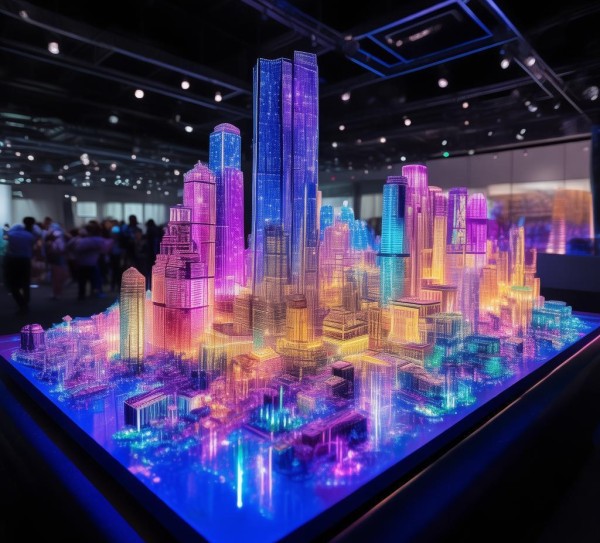
Digital Sandboard Model Exhibition at the 223 International展览 held in a specific location in the city successfully showcased the innovative use of digital technologies in the realm of exhibition design. The exhibition, titled "The Digital Transformation of Exhibition Forms," was a grand success, attracting a significant number of visitors who were impressed by the immersive experience it provided. Among the featured digital sandboard models, several unique and cutting-edge materials and designs were implemented, which not only reflected the structural integrity of traditional sandboard models but also integrated advanced digital technologies. One notable model incorporated intelligent composite materials, enabling real-time temperature, humidity, and wind speed monitoring, thereby offering a more precise environmental control system. Another model utilized 3D printing technology, allowing users to customize various shapes and functionalities according to their specific needs, creating a unique and personalized experience. The exhibition offered a multifaceted sensory experience, enabling viewers to interact with these digital sandboard models through touch, sight, and sound. This hands-on interaction helped participants gain a deeper understanding of the innovative world of digital design and its potential to transform traditional exhibition practices. A participant remarked, "These digital sandboard models not only provide a visually stunning experience but also offer a groundbreaking way to integrate digital solutions into the planning process. They are a tangible representation of how digital technologies are redefining the future of architecture and urban planning." The event attracted a wealth of industry experts and enthusiasts, who shared their insights and research findings on the latest advancements in digital technology. Their discussions and presentations provided valuable perspectives on how these digital sandboard models could be applied in real-world scenarios, potentially leading to innovative solutions in architectural design and urban planning. The exhibition was not merely a technical demonstration but also a visual marvel, showcasing the elegance of traditional sandboard models alongside the innovative features of the digital models. Whether for professionals or the general public, the exhibition offered a rich and immersive experience that allowed participants to explore their creativity and engage with the ideas of the future. With its focus on immersive experiences, visual appeal, and the integration of cutting-edge technologies, the exhibition has become a beacon of innovation in the field of exhibition design. Looking ahead, it is anticipated that digital sandboard models will continue to evolve, offering even more versatile and dynamic solutions for shaping the future of architecture and urban planning. This exhibition not only enhanced the understanding of digital technologies but also sparked a deeper curiosity about the potential of future architectural innovations. It has become a testament to the transformative power of digital technologies in reshaping the way we create and interact with space and design.